March 2016 |
drinkanddrugsnews
| 9
read the reports, see the pictures:
figures the increases in deaths aren’t
among the people in services – the
people who have that safety net.’
One real concern was cuts to other
associated services, however, such as
wider social support. ‘As that network
that’s wider than services themselves
begins to fall away – and these are
often services that are easy to cut – it’s
possible that that is having an impact.’
FDAP chief executive Carole Sharma
then explained how her organisation –
the professional body for the paid and
unpaid drug sector workforce – was
trying to improve quality and make sure
everyone was working to an ethical
framework and code of conduct. ‘As
service users, your voice is essential to
that,’ she said.
Many delegates expressed concern
about custody of children and other
parental issues, and O’Connor reassured
them that there was an increased focus
on substance-using parents across
government departments. ‘What this
government is particularly interested in
is improving the life chances of drug-
using parents. I recognise that there is a
huge amount of extra pressure on
service users who have parental
responsibility, and I think the way local
services link with safeguarding and
children’s services is hugely important.
When it comes to that, the voice of
service users is much more important
than mine.’
There was, however, a difference
between being listened to and being
heard, some delegates argued. ‘It’s
about how meaningful it is,’ said one,
while another stated that ‘it’s all about
recovery now – if you’re not jumping
through those hoops then you’re really
in trouble’.
‘In the South West we’ve not had
any consultation about cuts or the
impact of cuts,’ said a representative
from Badsuf (Bournemouth Alcohol and
Drug Service User Forum). ‘If ever there
was a time for service user consultation,
it’s now. Consultation and representa-
tion is meaningful only if it’s genuinely
listened to and acted upon.’
‘That it’s getting harder to have
meaningful consultation and input
because of the cuts is absolutely right,’
agreed Karen Biggs. However, Chris Ford
argued that the ‘main concern’ of
Collective Voice – as a ‘collection of
eight of the biggest providers’ – was
‘keeping hold of the part of the sector
they’ve got, because the NHS has been
pushed out’.
‘I think we collectively have to work
at making sure that service users have a
voice,’ stressed O’Connor. ‘It isn’t Karen
and her colleagues that have pushed the
NHS out – that has been a decision of
commissioners and policy makers, and
it’s at local level that service users need
to have a voice. It’s absolutely vital.’
One Coventry-based delegate
stated that his organisation had
‘moved past service user involvement
now – we’re about recovery visibility.
We’re part of the community, and we
sit down with commissioners to shape
services. The point is that we don’t
need anyone’s permission. We just get
up and make it happen.’
Just a ‘tiny amount of the money
that’s being wasted on everything else’
could have a huge impact if it ‘went to
the right place’, he told the panel. ‘It
would change all your statistics.’
On the question of the growing
problem of gambling addiction, O’Connor
told the conference that it was ‘absolutely
shocking how it’s mushroomed in front of
us, with advertising on every TV and
billboard. But although it’s a massive
problem, the last thing we want to do at
the moment is take any more money out
of drug and alcohol treatment. So it’s
been pushed back to the industry to fund
that treatment.’
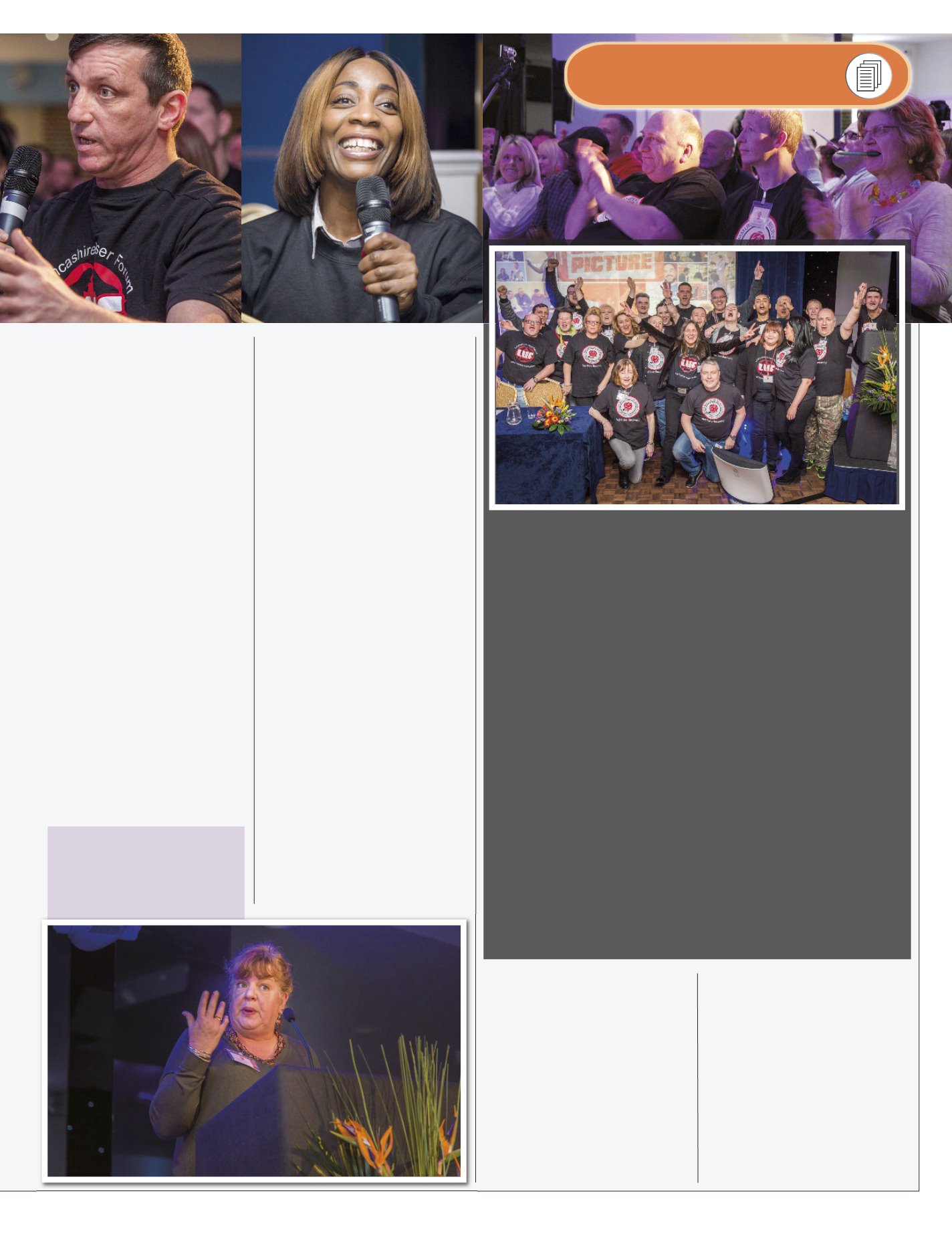
RecoveRy in Bloom
‘I came to a
DDN
conference and thought, “I could do that”,’ Red
Rose Recovery CEO Peter Yarwood told the conference’s closing
session. ‘So I took that inspiration back to Lancashire and found
people who believed in me.’
Trying to get his life back together after 20 years dominated by drugs and
prison, he became ‘massively demotivated’ after attempts to find work were
thwarted by his criminal record. ‘Society will stigmatise you, but I took that
stumbling block and made it into a building block,’ he told delegates.
Lancashire User Forum was now a limited company, he said, and in the
last year alone its volunteers had contributed more than 15,000 hours of
valuable work in the county. ‘That’s social, economic value that we’re
returning to the community. We focus our energies on what’s positive, not
what’s wrong – I’m bigger than my treatment.’ The organisation now had
almost 30 employees, he said, ‘and we’ve got a philanthropist who’s
investing not just money but providing technology as well.’
‘You’re more than people tell you,’ said his colleague Steve Watson. ‘It’s
about hope, not thinking, “I can’t do it”.’
‘Red Rose Recovery saw something in me,’ added another colleague,
Mark. ‘I was fresh out of treatment but they but they believed in me. If I’d
stayed in the box I was told I had to, I would have gone crazy. Treatment is
essential, but it won’t keep you clean. It’s about purpose, worth, belonging.
Believe in each other.’
‘as service users, your
voice is essential.’
Carole sharma


