BRINK OF
SOMETHING NEW
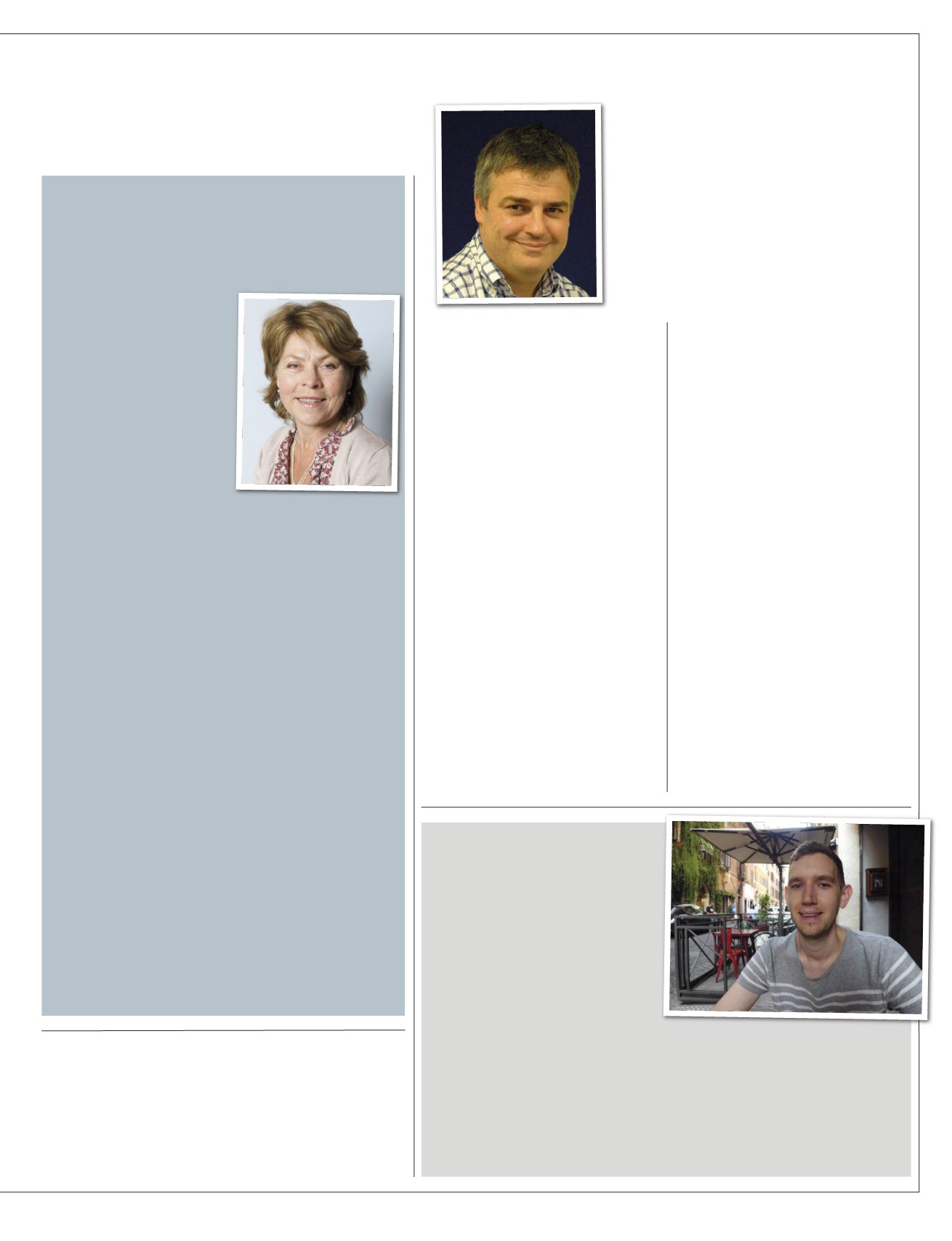
DDN’S OWN DR STEVE BRINKSMAN
has
joined recovery charity Swanswell as its
medical director, the organisation has
announced. A GP for 25 years, he has worked
extensively with drug and alcohol users
throughout his career, and is also clinical lead
for SMMGP. ‘I’m delighted that Steve’s joined
the team,’ said Swanswell chief executive
Debbie Bannigan. ‘His knowledge and
experience will help to ensure Swanswell’s
clinical governance continues to exceed best
practice standards and meet the expectations
of our service users and commissioners.’
SUPPLY LINES
THE ‘HEROIN DROUGHT’ OF 2010-11
– which
saw a significant drop in purity levels – was
a ‘catalyst for some users to tackle their
addiction and enter treatment’ according to
a Home Office report. There were, however,
no significant falls in overdose rates, with
some areas reporting an increase ‘as well as
other side effects’ as a result of additional
adulterants in heroin and/or replacement
substances.
Impact of the reduction in
heroin supply between 2010 and 2011
at
QUALITY PARTNERS
SMMGP HAS FORMALISED
its links with the
National Substance Misuse Non-Medical
Prescribing Forum in order to help ‘uphold
standards of quality as a hallmark of good
clinical practice in the field of drug and
alcohol treatment’. The partnership gives the
organisations a joint membership of more
than 8,000, and ‘signals our commitment to
continue to further our common goals, serve
our membership and strengthen our
leadership position in the field,’ said SMMGP
clinical lead Steve Brinksman.
LICENCE TO ILL
ALMOST 90 PER CENT OF COUNCILS
would like
to see a public health objective included in the
Licensing Act to reduce the ‘saturation of
communities with pubs, clubs and off-
licences’, according to the LGA. At the moment
local authorities are unable to veto new
premises on public health grounds.
‘Obviously councils are not seeking powers
to refuse every application,’ said LGA licensing
spokesperson Tony Page, ‘but it would
certainly allow them to take a more balanced
view in line with their other priorities such as
creating vibrant and safe town centres and
protecting people from harm.’
March 2016 |
drinkanddrugsnews
| 5
PUBLIC HEALTH
DIRECTORS VOICE
CUTS CONCERNS
MORE THAN 70 PER CENT OF
DIRECTORS OF PUBLIC HEALTH
say
that drug and alcohol services in
their area are likely to be reduced in
the coming financial year, according
to a survey by their membership
body, the Association of Directors of
Public Health (ADPH).
ADPH members were asked
about the likely impact of the
government’s £200m cut in its
public health grants to local
authorities (
DDN
, September 2015,
page 4). Overall, 78 per cent of
directors said that the reduced
funding would ‘have a detrimental
impact on health’ in their area,
with all services likely to suffer
reductions next year, although
none of the respondents said they
expected the cuts to mean drug or
alcohol services being completely
decommissioned. The reductions
are a further blow in the context
of ‘wider local authority cuts and
NHS financial difficulties’, says
ADPH, with 75 per cent of
directors saying there would be an
increase in health inequalities.
More than 90 per cent of the
directors stated that they were
‘centrally involved’ in any decisions
about cuts themselves, with the criteria a combination of ‘politics,
statutory requirements, evidence, need and pragmatism’. Almost 60
per cent of respondents also said they expected to lose staff.
‘Devolving public health to local government was a positive step,
and councils have embraced these new responsibilities,’ said the Local
Government Association’s (LGA) community wellbeing spokesperson,
Izzi Seccombe. ‘However, as ADPH’s analysis shows, the significant
cuts to public health grants will have a major impact on the many
prevention and early intervention services carried out by councils.
These include combating the nation’s obesity problem, helping
people to stop smoking and tackling alcohol and drug abuse.
‘Given that much of councils’ public health budget goes to pay for
NHS services like sexual health, public health nursing, drug and
alcohol treatment and health checks, these are cuts to the NHS in all
but name. And it will put further pressure on other NHS services.’
HIV HELP
A NATIONAL CAMPAIGN
to oppose cuts to
HIV services has been launched by a
country-wide alliance of charities and
professional bodies. The ‘Support people
with HIV: stop the cuts’ campaign has
written to health secretary Jeremy Hunt to
demand adequate funding, effective
commissioning and access to support for
everyone living with HIV. ‘At a time when
rates of HIV are increasing, and stigma is as
apparent as ever, we are seeing the start of an
alarming trend of local authorities across the
country scrapping HIV services,’ said Terrence
Higgins Trust membership officer Alex
Sparrowhawk.
‘The national campaign is about sounding
the alarm to policy makers, councils, and the
public – these essential services are under serious threat and we need your help.’
‘We are seeing the start of an
alarming trend of local
authorities across the country
scrapping hiv services.’
ALex SPArroWhAWk
‘Devolving public
health to local
government was a
positive step...
however... the
significant cuts to
public health grants
will have a major
impact on the many
prevention and early
intervention services
carried out by councils.
izzi SeCCoMBe
DYING FOR A DRINK
THERE WERE 8,697 ALCOHOL-RELATED DEATHS
in the UK in 2014, according to the latest ONS
figures, 65 per cent of which were among
males. Most deaths were in the 55-64 age
range, although the overall death rate has
continued to fall since its 2008 peak.
Dr Steve Brinksman
joins recovery charity
Swanswell as its now
medical director.


