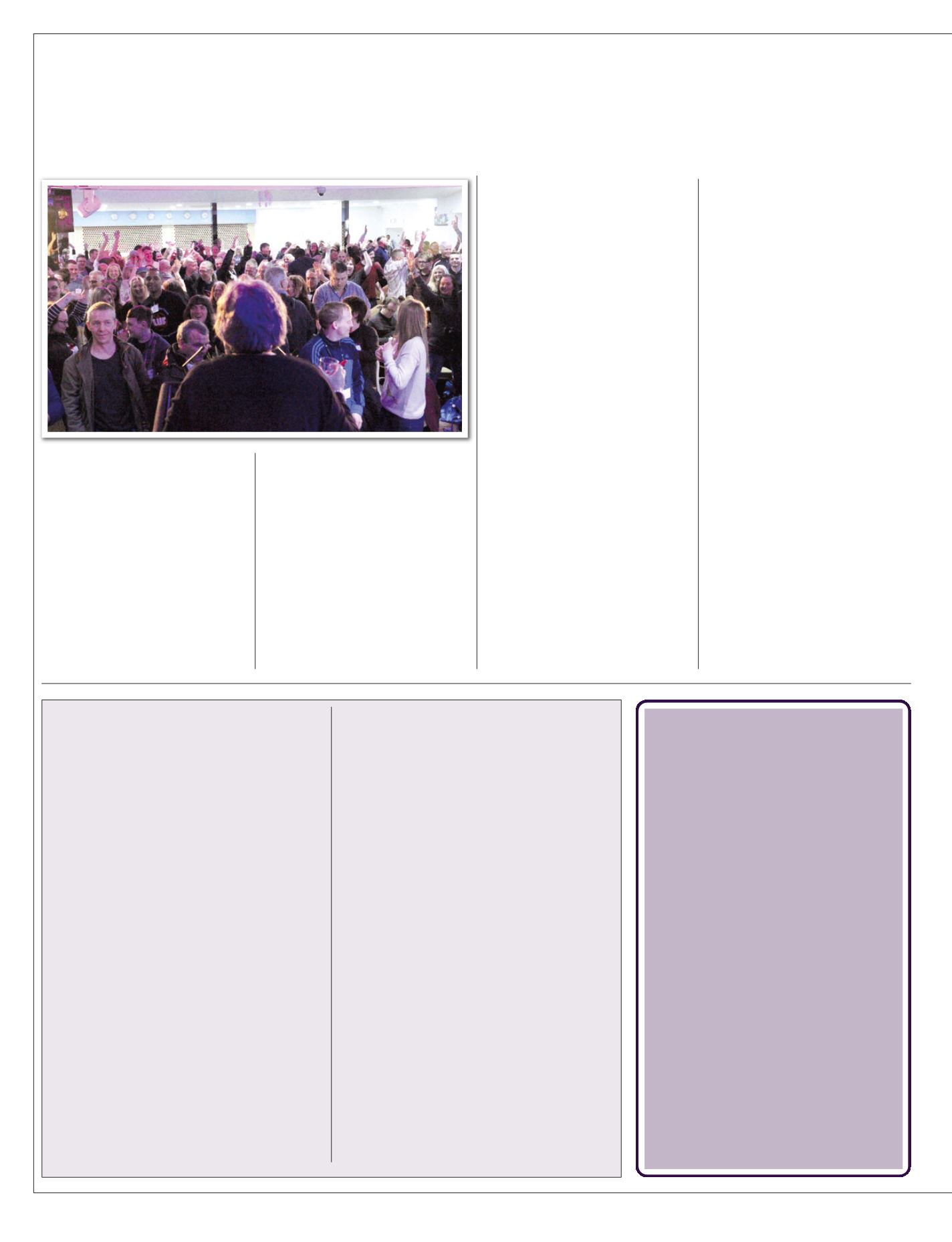
Much to build on
I want to congratulate you on what I
think, was the best ever
DDN
conference – there was a real balance
and we got a long way to the title
The
challenge: getting it right for everybody.
Why was it so good? Loads of
reasons but I would like to pick out a
few. It started with a most wonderful
speaker, Linda Chan from BoB (Build On
Belief), who spoke about her own life
and journey and the amazing impact of
being able to volunteer whilst still in
treatment and on OST. I really felt it –
how she felt on walking nervously into
BoB that first time, only to be
welcomed and not rejected because she
was on a script. This rejection of people
on OST happens in many places and it is
totally unhelpful and uncalled for.
People need to be supported where
they are, not where services or workers
think they should be.
The second big success for me was
the inspiring and collective passionate
campaign to get naloxone in England.
This reminded me of the old times – no
egos, sharing all, everyone wanting to
work together. People from all
philosophies, strictly proud abstinence-
based organisations, drug user organisa-
tions, human rights organisations and
treatment services, came together to
collectively fight to make naloxone more
available in England.
The long awaited PHE guidance on
naloxone is a helpful document but
unfortunately it is only ‘advice’ to local
authorities. Hence it doesn’t name and
shame or pressurise the 54 per cent of
local authorities having no ‘take-home
naloxone’ – we must do that! Naloxone
is a safe and cost-effective tool to save
lives and is proven not to cause people
to use more drugs. There is no excuse
not to offer it if we truly care about
recovery and human life.
Sadly I need to remember that my
enthusiasm is set in the worrying state
of the sector clearly highlighted in the
recent DrugScope survey, which shows
that the substance misuse field is still
addicted to re-commissioning. It is clear
that substance misuse services are no
longer protected from the reduction in
public sector spending, that the sector is
likely to suffer substantial disinvestment
between 2014 and 2016, and that cuts
in other services have also had signifi-
cant impact on drug users in treatment.
But we do have ways forward and I
want to share how Mat Southwell
talked about how active drug users and
community mobilisation were key to
the early HIV response and, now, how
globally active drug users and recovery
drug users are working together to
increase availability of naloxone. We
saw that at this conference and this is
what we must build on.
Finally I must say total thanks and
well done to all the
DDN
team. I have
some idea how tough the finances were
this year, how many people you support
to come could not get there without your
help, and your total commitment to this
vitally important conference.
Although I’m sort of retired can I
book my place for next year?
Dr Chris Ford, clinical director, IDHDP
Letters and Comment
‘People need to be
supported where
they are, not
where services or
workers think
they should be..’
14 |
drinkanddrugsnews
| March 2015
STEPS TO RECOVERY
With six months until the annual
recovery walk,
Daniel Galloway
shares
how his involvement was the start of a
much bigger personal journey
I’M A PERSON IN RECOVERY
. I’ve been free
from using alcohol and other drugs for more than six
months now. As part of maintaining my sobriety I am
volunteering time to help organise the UK Recovery
Walk to be hosted by Durham on 12 September.
I’m acting as secretary for the host committee,
doing exciting things like typing up meeting notes,
but also putting my views forward on decisions that
will help shape the event. After attending the
Manchester recovery walk, being filled with tears
most of the day, and attending the first planning
meeting, I knew I wanted to have a proactive role in
the event. However, due to my experiences with
alcohol and other drugs I was a shell of the person
that I am today. I was full of fear and self-doubt about
my ability to take on the role. I did summon the
courage to put my name forward and they accepted
me, especially as I could use a computer and email.
The Manchester walk was an emotional day. I was
three weeks sober, and I had never seen or imagined
so many people celebrating recovery. I had a fantastic
day and the tears finally came out as I sang with the
recovery choirs
Something Inside So Strong
. Seeing the
crowd link arms and singing along finally led to me
letting my emotions go.
Alcohol and cannabis robbed me of all my self-
respect and dignity. This finally brought me to my knees
and I reached a point where I had to seek help. I have
slowly started to rebuild my life and see my involvement
in the recovery walk as a key component in my recovery.
Alongside attending the local drop-in centre and taking
part in sport, I
have also got
involved in the
fundraising and
the art group sub-
committees.
Hopefully
someone else can
get that same
feeling of
belonging from
the Durhamwalk that I got from the Manchester walk,
and will be able to start their recovery journey.
It’s a privilege to have the UK Recovery Walk in
Durham, a small city and a relatively new recovery
community. We are four months into planning the
walk and things are moving on well. Having a load
of people in recovery working on the project means
things get done!
See you in September!
ATTENTION!
SHOULD OST BE
TIME LIMITED?
In the opening session of the DDN confer-
ence, Annette Dale-Perera, a member of the
Advisory Council on the Misuse of Drugs,
explained how the ACMD was collecting
evidence about the quality of opioid
substitution treatment (OST) in England. Is
there any case for time limiting it, as
suggested by Ian Duncan Smith?
Delegates were invited to complete
questionnaires at the conference, and the
time limit for responses has now been
extended to allow our readers to participate.
THE EVIDENCE IS IMPORTANT
,
and will help to redress unfair policy.
Please complete a short survey at
‘I have slowly
started to rebuild
my life and see my
involvement in the
recovery walk as a
key component...’


