


Legal line |
Obituary
READER’S QUESTION:
I’ve been awarded Employment and Support Allowance and
placed in the work-related activity group. My friend is in the
support group – I’m not really sure what the difference is but I
know he gets more money, even though my drug problem is
worse than his. I’m really frustrated as I took lots of medical
evidence to the ATOS assessment, but the examiner wasn’t
interested. Can I do anything?
KIRSTIE SAYS:
Unfortunately your situation is not unique –
many people have similar experiences of the
Work Capability Assessment (WCA). You were
right to present supporting evidence at the
earliest stage. You can still provide this to the
DWP and ask them to review the decision.
Normally this must be within a month of the
written decision, but sometimes discretion can
be exercised outside of this.
You mention that you have a drug problem but do not say what other
physical and/or mental health conditions you suffer from. Employment and
Support Allowance (ESA) will not be awarded solely for a drug or alcohol
problem. A claimant has to score points in one or more areas, which may
also be related to substance misuse. As you have been awarded ESA you
must have scored points for certain physical and/or mental health
descriptors.
The work-related activity group means that although it has been decided
you cannot work due to illness, you are able to do things which are
connected to working and aimed towards moving you back into work,
including attending work-focused interviews with an adviser. However,
depending on your individual circumstances it is possible for attendance at
interviews to be deferred or even waived. The support group means that
your condition is so serious you cannot even undertake work-related activity.
Claimants in this group get £5.90 more per week than those in the work-
related activity group and do not have to attend work-focused interviews.
Allocation to the support group is quite rare as the descriptors are very
narrow. Although you may feel that your condition is severe, and you have
medical support for this, if your circumstances don’t fit into one of the
specific categories you will be placed in the work-related activity group.
Alternatively, if there is a substantial risk to yourself or others posed by
work-related activity you could also be placed in this group. If you think you
meet the criteria for the support group you can request a review of the
decision and should provide as much evidence as possible. If this is
unsuccessful you can appeal to an independent tribunal. It can be difficult
to get legal representation for a review/appeal, but your local CAB or law
centre may be able to assist in some way.
Email your legal questions to claire@cjwellings.com
We will pass them to Kirstie to answer in a future issue of DDN.
For more information on benefits and drug use call the Release helpline on
0845 4500 215.
August 2012 |
drinkanddrugsnews
| 11
www.drinkanddrugsnews.com
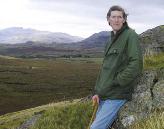
It’s sad to sit here in
Canada and record the
death of my great
friend Bri Edwards.
He
faced his final days with
great courage, and passed
away on 2 July at home
with his family all around
him. Two weeks before his
death he had completed
his final examination for
his batchelor’s degree
from the Open University.
Examiners came to his
home in Seascale, Cumbria and he dictated his exam answers.
Bri and I first met in the late 1970s when we were both residents at the
ROMA (Rehabilitation of Metropolitan Addicts) in West London. ROMA was in
a few large houses along Talgarth Road, past the North End Road andWest Ken
tube where the A4 broadens and swells out of London. It was more of a
housing project than a residential community, although that was to change
when a young organisation called Turning Point took on its challenge in 1980.
Bri was a tall gangling Scotsman in his mid 20s. He stood out because of his
extraordinary height and his animated delight in chatter and argument. We had
things in common from the start – we were ‘working’ residents out of the house
during the day. Bri worked for the RANK organisation on Wardour Street,
maintaining the building and its fittings from a dimly lit basement cavern that
was his own little place. He was intense, funny, and passionate about the things
he loved – music, horticulture, and the care of trees. He was also compassionate
and interested so I found it easy to share my own feelings and sadness.
We both had ‘scripts’. Mine was a plain oral variety from UCH. Bri had
‘private’ doctors and needed a more exotic prescription. He was hard working
all his life, but private scripts needed an income and Bri was incredibly
organised about managing this part of his life.
As I learned of his early life, I started to understood why he needed such a
release. It was sad and short on love and security, and his sister Linda had looked
after himwhen they were abandoned as young children. Such events had shaped
the person I knew in the 1970s but not the man he became later in his life.
I didn’t know this until the end of 2007 when my telephone rang here on
Vancouver Island and a Scots voice came out of the phone asking if I was the
Bill Nelles that had once been at ROMA.
It was Bri, of course, and as we talked, he told me he was married with
children and had a strong and loving wife, Lyn. They lived in Seascale where Lyn
and Bri had founded a youth outreach program called Shackles Off. He advised
a local castle on their trees and gardens, which had been his livelihood until an
accident which left a hand crushed.
As we talked further, I realised that we had followed much the same path
to strengthen ourselves and maximise good health. Like me, Bri hadn’t used
street drugs or injected for years. He knew of my advocacy work and was
involved in the local Cumbrian Service Users Group. He had found a strong
Christian faith and he had a wonderful family – so important to him after his
own experiences.
I followed Bri’s work over the next five years as he and Lyn pursued their
projects. In 2008 I spent a week in the UK doing some advocacy training for his
group, so I was able to spend some quality time with Bri, and see how our lives
had changed.
We had both found life partners who loved us. And we had also found
recognition and involvement in issues like advocacy that also helped us to feel
good about who we were. We had each found what we needed to fill our
sadnesses and it was called love. I’ll miss you, my friend.
Bill Nelles
Release solicitor
Kirstie Douse
answers
your legal questions in her regular column
LEGAL LINE
HOW CAN I MAKE SURE I’M
GETTING THE RIGHT BENEFITS?
BRI EDWARDS
OBITUARY